Mastering Boat Transom Repair: Your Ultimate Guide to a Smooth Sailing Experience
Before diving into the critical steps of restoring your boat’s transom, it’s worth considering complementary services that can enhance your overall boating experience. For instance, if you’ve ever struggled with a faulty anchor mounting point or a corroded cleat base, check out our detailed guide on Boat Anchor CB Repair. With clear instructions and high-quality replacement parts, you can reinforce your anchor crossbeam and improve your vessel’s holding power—even in challenging conditions.
Just as a damaged transom compromises your boat’s structure, a weakened anchor crossbeam can jeopardize safety at anchor. That’s why our Boat Anchor CB Repair page outlines step-by-step solutions—from removing old hardware to installing marine-grade backing plates. Whether you’re a weekend cruiser or an avid angler, reinforcing these critical points ensures your anchor system remains rock-solid, preventing unwanted shifts or failures when you need stability the most.
A boat’s performance relies on more than its hull and hardware—interior integrity plays a huge role in comfort and resale value. If upholstery seams are splitting or cabinetry joints are loosening, our Boat Interior repair services cover everything from cosmetic touch-ups to full refits. By addressing interior wear early, you preserve your boat’s ambiance and prevent minor issues from turning into costly structural problems down the road.
Introduction to Boat Transom Repair
Imagine you’re out on the open water, the sun is shining, and the waves are gently lapping against your boat. It’s a perfect day until you notice something’s not quite right with your vessel’s performance. The culprit? A damaged transom. The transom is the backbone of your boat, providing structural support and housing the engine. Over time, it can suffer from wear and tear, leading to issues that need immediate attention. Understanding the intricacies of boat transom repair is crucial for maintaining your boat’s integrity and ensuring your safety on the water.
Why Choosing the Right Repair Service is Crucial
When it comes to repairing your boat’s transom, not all services are created equal. The right repair service can mean the difference between a quick fix and a long-lasting solution. But how do you choose the right one? Look for a service with a proven track record, experienced technicians, and positive customer reviews. Certifications and industry experience are also key indicators of a reliable service. Remember, a well-repaired transom not only enhances your boat’s performance but also extends its lifespan.
Choosing the right service also involves considering the materials and techniques they use. Modern repair services often employ advanced materials like carbon fiber and epoxy resins, which offer superior strength and durability compared to traditional materials. Additionally, a reputable service will provide a warranty on their work, giving you peace of mind that your investment is protected.
Step-by-Step Guide to Boat Transom Repair
Assessment and Diagnosis
The first step in any repair process is a thorough assessment. Inspect the transom for visible signs of damage such as cracks, rot, or delamination. Use tools like moisture meters to gauge the extent of the damage. This initial diagnosis will guide the repair process and help you determine the necessary materials and techniques.
A comprehensive assessment might also involve checking the alignment of the transom with the rest of the hull. Misalignment can indicate underlying structural issues that need to be addressed. It’s also important to assess the condition of the surrounding areas, such as the stringers and bulkheads, to ensure there are no additional problems that could affect the repair.
Preparation
Once you’ve assessed the damage, it’s time to prepare the area for repair. Remove any components attached to the transom, including the engine and hardware. Clean the surface meticulously to ensure a smooth working area. This step is crucial for the success of the repair.
During preparation, it’s also important to protect the surrounding areas from dust and debris. Use plastic sheeting or tarps to cover the interior of the boat and any sensitive equipment. This not only keeps the work area clean but also prevents damage to other parts of the boat.
Removal of Damaged Material
Carefully cut away the damaged sections of the transom using appropriate tools. It’s essential to remove all compromised material to prevent future issues. This step requires precision and patience, as any leftover damage can lead to further complications.
In some cases, removing the damaged material may reveal additional issues, such as hidden rot or delamination. Be prepared to adjust your repair plan as needed to address these problems. It’s better to take the time to do a thorough job now than to face more extensive repairs later.
Reconstruction
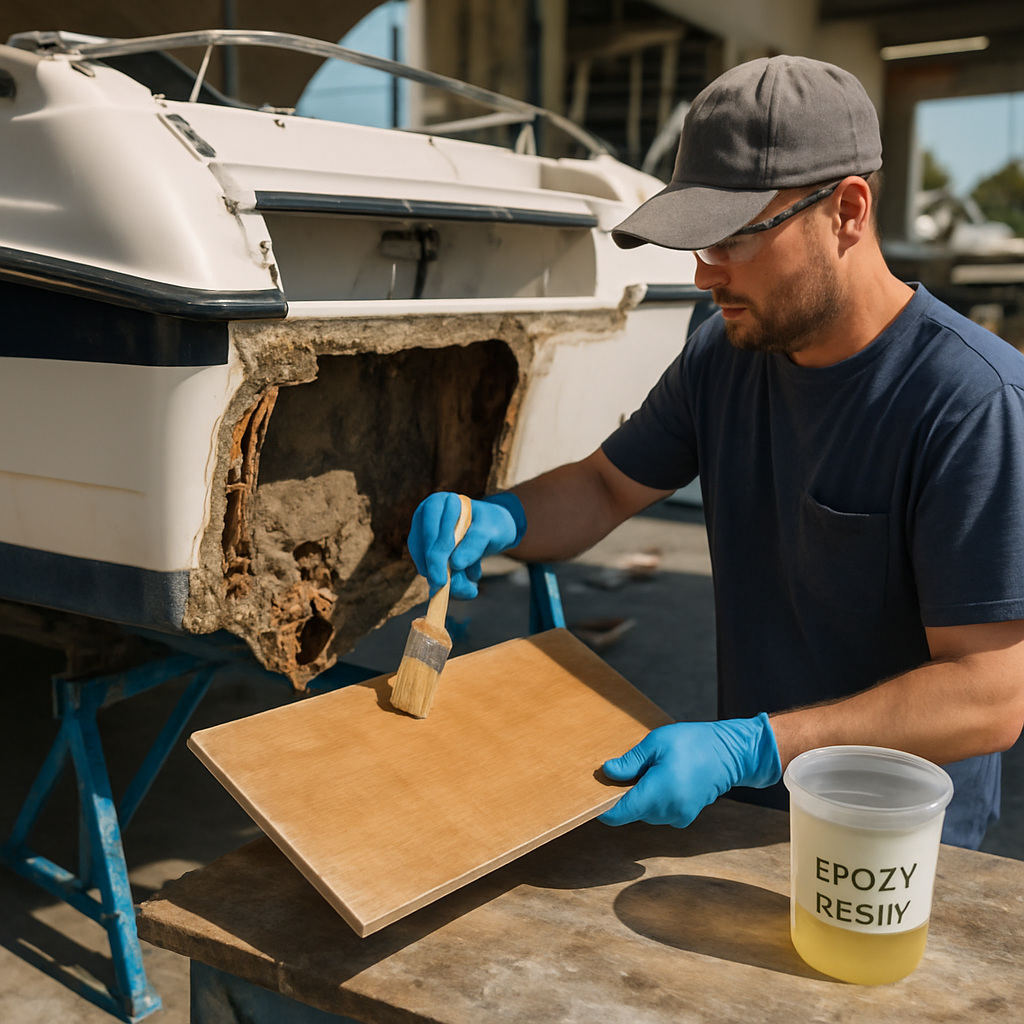
Rebuilding the transom involves using high-quality marine-grade plywood or composite materials. Apply epoxy resin to bond the new material securely. This step is where the transom begins to regain its strength and functionality.
When selecting materials for reconstruction, consider the specific needs of your boat and the conditions it will face. For example, if you frequently boat in saltwater, you may want to choose materials that offer enhanced resistance to corrosion. Additionally, consider the weight of the materials, as this can affect the boat’s performance and fuel efficiency.
Reinforcement
To ensure durability, add additional layers of fiberglass. Each layer should be properly cured before applying the next. This reinforcement is vital for the transom’s structural integrity and longevity.
The number of fiberglass layers needed will depend on the size and type of your boat, as well as the extent of the damage. Consult with a professional to determine the appropriate level of reinforcement for your specific situation. Properly reinforced, your transom will be able to withstand the stresses of boating for years to come.
Finishing Touches
The final step is to sand the repaired area to achieve a smooth finish. Apply a protective coating to prevent future damage. This not only enhances the appearance of the transom but also adds an extra layer of protection against the elements.
Consider using a high-quality marine paint or gel coat for the final finish. These coatings are designed to withstand the harsh marine environment and provide long-lasting protection. Additionally, they can be color-matched to the rest of your boat for a seamless appearance.
Common Problems and Solutions in Transom Repair
Boat transom repair can present several challenges, but with the right approach, these can be effectively managed.
- Water Intrusion: Often caused by poor sealing or damage, water intrusion can lead to rot. Ensure all seals are intact and replace any compromised materials. Regular inspections can help catch this issue early.
- Delamination: This occurs when layers of the transom separate. Reinforce with additional fiberglass layers and ensure proper bonding. Delamination can severely affect the transom’s strength, so addressing it promptly is crucial.
- Cracks and Structural Damage: Use epoxy fillers and fiberglass patches to repair cracks and reinforce the structure. These repairs require precision to ensure the transom’s integrity is restored.
In addition to these common issues, be aware of potential problems with the transom’s hardware, such as bolts and brackets. Corroded or loose hardware can compromise the transom’s strength and should be replaced as part of the repair process. Regular maintenance and inspections can help prevent these issues from developing.
How LeadGen gandfsporting.net Can Assist You
At LeadGen gandfsporting.net, we understand the importance of a well-maintained boat. With over 50 years of industry experience, we offer a comprehensive range of services tailored to your needs. Whether you’re dealing with a minor repair or a major overhaul, our skilled technicians are equipped with the latest techniques and materials to restore your boat to optimal condition. From new and used boats to essential accessories and expert repair services, we are your one-stop-shop for all things boating.
Our team is committed to providing personalized service and expert advice to help you make informed decisions about your boat’s maintenance and repair. We take pride in our attention to detail and dedication to customer satisfaction, ensuring that every repair is completed to the highest standards.
Customer Testimonials and Success Stories
Our commitment to quality and customer satisfaction is reflected in the positive feedback we receive from our clients. Here are a few success stories from boat owners who have trusted us with their transom repairs:
- John D.: “The team at LeadGen gandfsporting.net did an outstanding job on my boat’s transom. Their attention to detail and professionalism were second to none. I couldn’t be happier with the results.”
- Sarah L.: “I was impressed with the quick turnaround and the quality of the repair. My boat looks and performs like new! The team was knowledgeable and friendly, making the entire process stress-free.”
These testimonials highlight our dedication to delivering exceptional service and results. We believe that every customer deserves the best, and we strive to exceed expectations with every repair.
Tips for Maintenance and Care Post-Repair
To ensure the longevity of your repaired transom, follow these maintenance tips:
- Regular Inspections: Periodically check the transom for signs of wear or damage. Early detection can prevent minor issues from becoming major problems.
- Proper Sealing: Ensure all seals are intact to prevent water intrusion. This simple step can significantly extend the life of your transom.
- Routine Cleaning: Keep the transom clean and free from debris to avoid unnecessary wear. A clean transom not only looks better but also functions more efficiently.
In addition to these tips, consider investing in a quality boat cover to protect your vessel from the elements when not in use. This can help prevent UV damage and reduce the risk of water intrusion. Regularly applying a marine-grade wax or polish can also help maintain the transom’s finish and protect it from the harsh marine environment.
By following these guidelines and choosing a reputable repair service like LeadGen gandfsporting.net, you can ensure your boat remains in top condition for years to come. Whether you’re a seasoned sailor or a weekend enthusiast, understanding and addressing transom issues is key to enjoying a safe and smooth sailing experience.